Hops, Pints, and a Place to Stay: America's Craft Beer Towns Are the New Road Trip Destinations
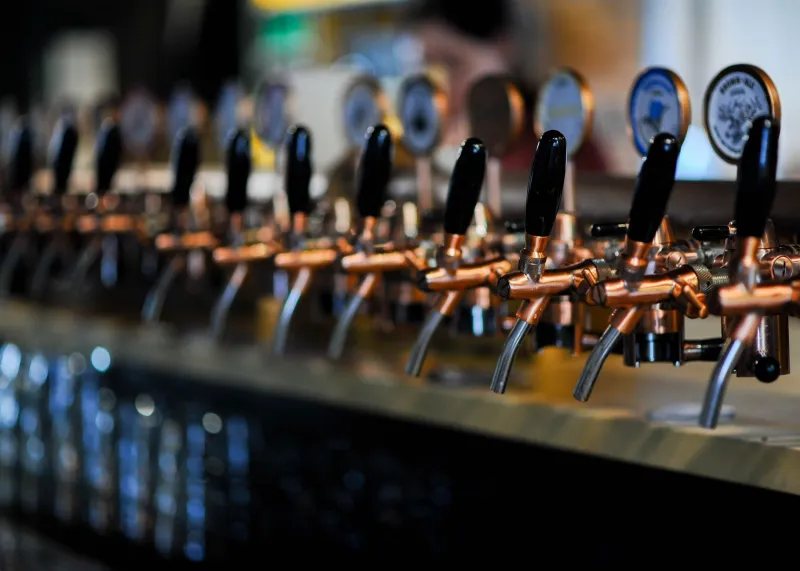
There's a moment that happens in every good taproom — usually somewhere between your second pour and your third — when you stop thinking about where you need to be next. The bar is warm, the beer is genuinely interesting, and the person next to you just recommended a spot down the street you absolutely have to try before you leave town. That moment, multiplied across a whole city, is exactly what's driving a quiet revolution in American travel.
Craft beer tourism isn't new. But what's changed is the scale of ambition. Travelers aren't just tacking a brewery visit onto an existing itinerary anymore. They're building entire trips — sometimes entire seasons — around the taproom scenes of smaller American cities that have quietly become something worth crossing state lines for.
Why Beer, and Why Now
The short answer is that craft beer got interesting in the same way food did — regional, specific, tied to place. A hazy IPA brewed with Colorado mountain water and a sour fermented in a converted Asheville textile mill aren't interchangeable products. They're expressions of somewhere. And travelers, especially the ones who've grown tired of the same airport hotel experience in every city, are paying attention.
The numbers back it up. According to the Brewers Association, craft brewery visits have become a primary travel motivator for a measurable slice of American tourists, with beer-focused travel generating billions in economic activity annually. But the more telling data point is anecdotal: ask any front-of-house worker at a well-regarded taproom in Fort Collins or Asheville where their customers drove in from, and the answer is almost never just next door.
Fort Collins, Colorado: Where the Scene Grew Up
Fort Collins doesn't always get the credit it deserves. Denver is louder, Boulder is trendier, and the mountain resort towns get more Instagram real estate. But serious beer travelers know that Fort Collins — home to New Belgium, Odell Brewing, and a rotating cast of smaller operations — has one of the most mature and walkable craft beer ecosystems in the country.
What makes it work as a destination isn't just the volume of breweries (though there are plenty). It's the way they fit into a genuinely livable city. You can spend a morning hiking Horsetooth Reservoir, grab lunch at a taproom that takes its food program as seriously as its beer list, and spend the afternoon doing a self-guided tour of the Old Town district without ever feeling like you're on a manufactured tourist circuit. The city didn't build itself around beer tourism — it built itself around beer culture, and tourists followed.
Several remote workers and long-term nomads have quietly adopted Fort Collins as a seasonal base precisely because of this. The cost of living is manageable compared to Denver, the outdoor access is exceptional, and the social infrastructure of the taproom scene — where regulars and visitors mix without much ceremony — makes it easier to feel connected to a place quickly. For people who move around a lot, that matters more than most travel guides acknowledge.
Asheville, North Carolina: The Brewpub That Became a City
If Fort Collins represents craft beer's steady maturation, Asheville is its more charismatic younger sibling — a mountain arts town that stumbled into beer greatness and leaned into it hard. With more breweries per capita than almost any other city in the country, Asheville has built an identity so thoroughly intertwined with craft beer that it's almost impossible to separate the two.
Hi-Wire Brewing, Burial Beer Co., and Highland Brewing are among the names that draw visitors from across the Southeast and beyond. But what keeps people there — sometimes for weeks at a stretch — is the way the beer scene connects to everything else Asheville does well. The food is serious. The music is constant. The surrounding Blue Ridge Mountains offer the kind of hiking that earns a post-trail pint in a way that feels genuinely satisfying rather than performative.
Brewers in Asheville will tell you that the community aspect of the scene is what they're most protective of. The city's craft beer culture has always had a collaborative streak — breweries share ingredients, cross-promote each other, and collectively resist the kind of consolidation that's flattened beer culture in other markets. For travelers, that translates into a scene that still feels local even when it's clearly drawing national attention.
How to Actually Plan a Brewery Trip (Without Overdoing It)
The temptation with any beer destination is to try to hit everything, which is a reliable way to remember very little and feel terrible on day three. The travelers who get the most out of these trips tend to slow down.
A few things worth knowing before you go:
Pick a neighborhood anchor. Both Fort Collins and Asheville have walkable brewery clusters. Staying within reasonable distance of those clusters — rather than optimizing for price and ending up in a suburb — makes the difference between a trip that flows and one that involves too much driving.
Build in non-beer time. The cities that have succeeded as beer destinations are interesting for reasons beyond beer. Treat the taprooms as a lens for exploring a place, not the entire point of it. You'll enjoy the beer more, and you'll actually remember the trip.
Talk to the staff. This sounds obvious, but it's consistently underrated. The person pouring your flight knows which neighboring breweries are doing something genuinely new, which food spots are worth the walk, and which local events are happening that week. That kind of local knowledge is the whole point of traveling this way.
Consider shoulder season. Both cities get busy in summer. Spring and fall offer better weather for the outdoor elements — and considerably shorter lines at the taprooms everyone wants to visit.
The Bigger Picture
What Fort Collins, Asheville, and a handful of other cities — Bend, Oregon; Bentonville, Arkansas; Grand Rapids, Michigan — have figured out is that craft beer can function as a genuine cultural anchor for a place, not just an amenity. When that happens, it changes the character of travel to those places entirely. You're not just passing through. You're showing up somewhere with its own distinct personality, its own rhythms, its own regulars who've been sitting at that bar stool longer than you've been planning the trip.
That's a different kind of travel than a resort weekend or a theme park visit. It's slower, more social, and harder to replicate. Which is probably why the people who discover it tend to come back — sometimes with a laptop and a longer-term lease in mind.
The pint's waiting. The only question is which town you're starting in.