The Lounge Car Is the Last Great American Bar — and the Only One Doing 79 MPH
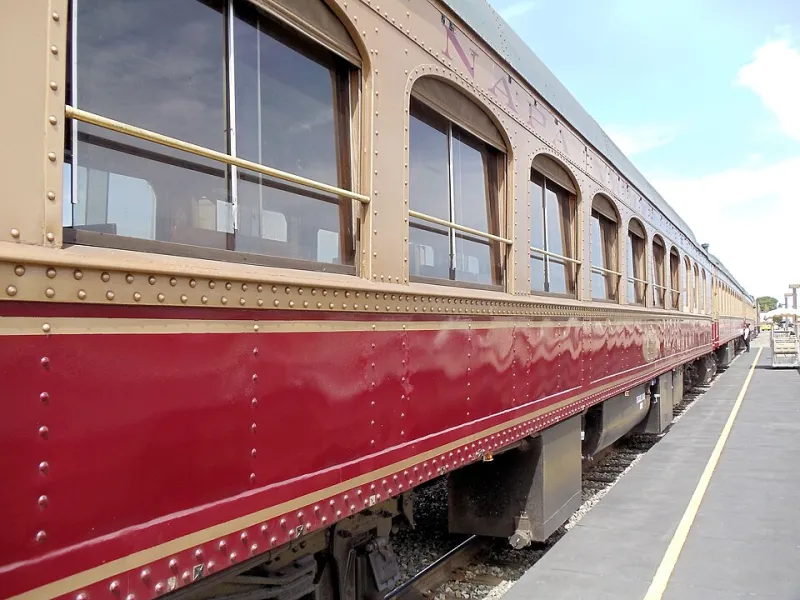
Photo: Jim G from Silicon Valley, CA, USA, CC BY 2.0, via Wikimedia Commons
There's a specific hour on the California Zephyr, usually somewhere past Glenwood Springs, when the light goes gold and the lounge car gets loud in the best way. Somebody's playing cards. Somebody's asleep against the glass. A guy from Kansas is explaining his sourdough starter to a woman from Osaka. And the beer is cold, and nobody is rushing you, because nobody can.
That's the whole argument. Not the scenery, though the scenery is real. The argument is that the American bar has spent twenty years optimizing itself into a transaction — timed reservations, two-drink minimums, a QR code where a bartender used to be — and the last room in the country that still works the old way is bolted to the floor of a train doing 79 miles an hour through a canyon.
The Antidote to the Airport Bar
We've all done the gate-side ritual: harsh lighting, a plastic cup, a $19 pour of something you didn't really want, one eye on the departure board. It's drinking as anesthesia.
The rail bar is the inverse. Amtrak's Sightseer Lounge — the double-decker car with the wraparound windows on the western long-distance trains — is a genuinely great room. Vinyl seats angled at the view. A café counter on the lower level selling beer, wine, and those little airline-style bottles. No television. No music you didn't choose. The entertainment is Nebraska.
And the pacing does something to people. Four hours into a trip, strangers start talking. Eight hours in, they're exchanging phone numbers. There's no other public space in America where that happens without a cover charge.
Routes Worth Planning a Trip Around
Not every Amtrak train is a drinking destination, but a handful of them earn the detour.
California Zephyr (Chicago–Emeryville). The gold standard. Two days across the Rockies and the Sierra, a Sightseer Lounge the whole way, and a dining car where sleeping-car passengers get a proper sit-down meal with a wine list. The Moffat Tunnel run west of Denver is the marquee stretch — six and a half miles under the Continental Divide, then Winter Park at roughly 9,000 feet.
Empire Builder (Chicago–Seattle/Portland). Built for the upper Midwest and Glacier country. The sleeper move here is to break the trip in Whitefish, Montana — a walkable mountain town with breweries and a distillery within a few blocks of the platform, plus a decent shot at seeing actual mountains from your barstool.
Coast Starlight (Seattle–Los Angeles). The Pacific Parlour Car is long gone, but the Sightseer Lounge and the dining car still deliver, and the route serves up one of the great bar-crawl tricks in the country: get off in Santa Barbara, where the station sits a short walk from the Funk Zone's tasting rooms and waterfront spots.
Southwest Chief (Chicago–Los Angeles). Raton Pass, high desert, and a lot of red chile. Quieter than the Zephyr and, for a certain kind of traveler, better for it. Lamy is the stop for Santa Fe if you want to build in an overnight.
Lake Shore Limited and the Crescent. The eastern options. No Sightseer Lounge, but the café car does fine, and the Hudson River run out of New York is one of the prettiest first hours of any train in the country.
The Rules of the Rail Bar (Read Before You Pack a Flask)
Amtrak's alcohol policy is simple and enforced: personal alcohol is allowed only in private sleeping accommodations, not in coach and not in the public cars. If you're in a roomette, your bottle is legal. If you're in the lounge, you buy from the café car. Some corridor trains don't sell alcohol at all.
Other things worth knowing before you board:
- The café car is card-only. Bring a card, not a twenty.
- Selection is decent but narrow — a couple of beers, a few wines, basic spirits. Set expectations accordingly, then be pleasantly surprised.
- Sleeping-car passengers on the western long-distance trains get dining-car meals included. The wine is not included, but it's reasonably priced.
- Be the easy passenger. The café attendant is doing a twelve-hour shift in a moving building.
Ordering at Altitude (Yes, It Matters)
Train cabins are pressurized but not to sea level, and the air inside is dry. Both change how a drink behaves.
Carbonation reads sharper up high, which is why a beer you love on the ground can taste oddly prickly over Raton Pass. Aromatics flatten in low humidity, so a delicate, floral gin drink may come off muted. And altitude plus dry air plus a long day of sitting is a dehydration machine — those little bottles hit harder than they should.
What works: highballs. A whiskey soda, a gin and tonic, anything long and citrus-forward. High-acid whites and light reds over oaky ones. Cans over bottles for beer, since they travel better and chill faster. And water in between, every round, no exceptions.
What doesn't: anything aggressively sweet, and anything served up at full strength at 8,000 feet. Save the martini for the hotel bar at the end of the line.
The Splurge Tier
If the café car feels too ordinary, the private and excursion rail world is having a moment. AAPRCO members charter vintage private cars and attach them to scheduled Amtrak trains — think mahogany, linen, and a bartender who knows your name by Nebraska. Excursion lines run their own show: the Rocky Mountaineer's Rockies to the Red Rocks route between Denver, Glenwood Springs, and Moab; the Napa Valley Wine Train; the Verde Canyon Railroad out of Clarkdale, Arizona; the Grand Canyon Railway's dome car; the Great Smoky Mountains Railroad through the Nantahala Gorge.
Expect to pay anywhere from about $150 for a dome seat on a scenic excursion to well over $1,000 a night for a private-car charter. Book months out — these sell through long before summer.
How to Plan a Cocktail-Focused Rail Trip
Start with a roomette rather than coach. It's not luxury — it's a bunk bed and a window — but it comes with meals, a door that closes, and the only legally sanctioned personal bar on the train.
Then keep it to one or two nights for a first trip. Long-distance rail is wonderful and it is also exhausting, and the person who books three consecutive nights on their first go usually spends day three staring at the wall.
Build in a buffer day at the far end. Trains run late. That's not a failure of the system, it's the nature of a system that shares track with freight and weather. Plan for it and it becomes part of the trip rather than a crisis.
And finally: don't over-plan the drinking. The lounge car rewards the person with a book, a window seat, and nowhere else to be.
Why Slow Wins
You can fly from Chicago to Denver in two and a half hours and be in a rental car queue before your seat cushion cools. Or you can take a day and a half, eat three meals at a table with a stranger, watch the Platte River turn into the Front Range, and drink a mediocre beer that tastes like one of the best of your life.
The train doesn't sell you a cocktail. It sells you the hours to enjoy one. In 2026, that's the rarest pour in America.