The Terminal Is the Destination: An Argument for Drinking at the Airport on Purpose
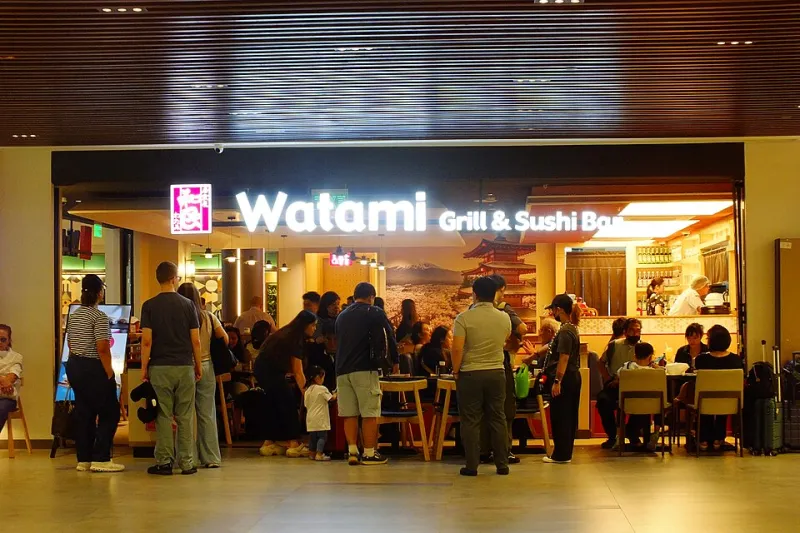
Photo: Wide Awake!, CC BY 4.0, via Wikimedia Commons
I still think about a two-hour layover in Portland more than I think about some actual vacations. There was a window seat at a bar overlooking a concourse, an old fashioned made with care by someone who clearly took the job seriously, and a steady parade of humanity in hiking sandals. Nobody was having a good day. Everybody was having a fine hour. It was, genuinely, one of the better bar experiences of my year.
Which is a strange thing to admit, because for most of my life the airport bar was a punchline. Warm light beer in a plastic cup. A basket of pretzels that cost more than the beer. Fluorescent light and gate announcements and the specific dread of a middle seat.
That version is mostly gone, at least at the airports that care.
The Case for the Destination Layover
Airports are the last great American public room. Everyone in one is mid-sentence in their own story — moving between a life they left and a life they're heading toward. That is precisely what bars are for. The airport bar is the purest version of the form, stripped of the pretense of a scene.
And the drinking has gotten legitimately good. Local concession programs have replaced a lot of the chains, which means the beer list in Portland is Oregon beer, the wine in San Francisco is from forty miles away, and there's a real restaurant with a real bar in Denver that keeps functioning during a snow delay when everything else has given up.
So here's the argument: if you're choosing flights, a long connection in a good terminal is not a cost. It's a feature. Book it on purpose.
How to Choose Before You Book
Three things matter more than the city on your boarding pass.
The concourse, not the city. A legendary bar in Concourse D is worthless if your connection lands in A and you have forty minutes. Pull up a terminal map before you book, not after.
Local concession programs. Airports that license space to local operators instead of national chains tend to have dramatically better bars — Portland, Minneapolis-St. Paul, San Francisco, Austin, and Denver are the consistent standouts.
Connection length. Two hours is the sweet spot. Ninety minutes is a beer and a sandwich. Three hours is a nap and a regret.
The Ranking
1. Portland International (PDX)
The local-first concession model is the whole reason this place wins. The beer is Oregon beer, served by people who seem mildly amused to be there, and the terminals are laid out so that a bar is never more than a short walk from your gate. Best for: the layover you didn't plan and now don't mind.
2. Minneapolis-St. Paul (MSP)
A wine and beer bar attached to a real liquor store in Terminal 1 is the correct business model and I will not be taking questions. Long winter connections are the specialty of the house.
3. Austin-Bergstrom (AUS)
Barbecue and local taps, and the terminal genuinely smells like smoke, which is either a feature or a warning depending on your appetite. Fast, loud, unpretentious. Best for: the hour before a flight you're excited about.
4. San Francisco (SFO)
The wine bars in Harvey Milk Terminal 1 and Terminal 2 are curated by people who know what they're doing. You can drink something grown within a day's drive of the runway. Best for: delayed red-eyes and anyone who'd rather have one good glass than three bad ones.
5. Denver (DEN)
The farm-to-table spot on Concourse C is a real restaurant with a real bar, and it's the only place at DEN where I've watched a bartender build a proper cocktail in the middle of a weather event. Best for: blizzards, which it handles better than the airline does.
Worth a mention: the New Orleans airport food hall, and any terminal where the beer list names the town it came from.
The Rules: Timing, Etiquette, and Not Missing Your Flight
The ninety-minute rule. Under ninety minutes to boarding, you get one drink and you drink it fast or you don't drink. Under sixty, you get a coffee.
One drink per hour of buffer, hard cap at two. This is the only math that matters. A three-hour layover is not a license for three drinks, because you will still be processing drink two when the gate closes.
Sit at the bar. Tables are for people with time. The bar is faster, and the bartender will tell you when to leave.
Eat first. Every bad airport decision I've made started with an empty stomach and a departure board.
Order local and order simple. A beer, a glass of wine, a whiskey. Do not order a mojito at a gate bar with eighteen minutes to boarding. The bartender will hate you and physics will punish you.
Check the walk time before you order. The map in your airline app is more accurate than your memory of this terminal from 2019.
Never leave security. Not for a better bar, not for a cheaper sandwich, not ever.
Know the difference between boarding time and departure time. They are twenty-five to forty minutes apart and the gap has ruined better travelers than you.
Tip in cash if you can. Airport bartenders work short, intense shifts and they remember faces.
The Etiquette Nobody Writes Down
Don't talk to the person on a headset. Don't ask a bartender to break a hundred during a boarding crunch. Don't order food at the exact moment the gate agent starts calling groups — nobody can help you then.
And if someone next to you mentions they're about to miss a connection, buy them a coffee instead of a beer. That's the whole culture of the place, and it costs four dollars.
The Layover You Should Actually Book
If you're building a trip this year, give yourself one deliberately long connection in a good terminal — two hours, one terminal, one good local bar, one real meal. It is a better use of ninety minutes than most of what you'd do at home on a Tuesday. And if it goes wrong, you were already at the airport.