Where the Coffee Grows, the Cocktails Follow: Colombia's Eje Cafetero Is the Nomad Scene You Haven't Heard About Yet
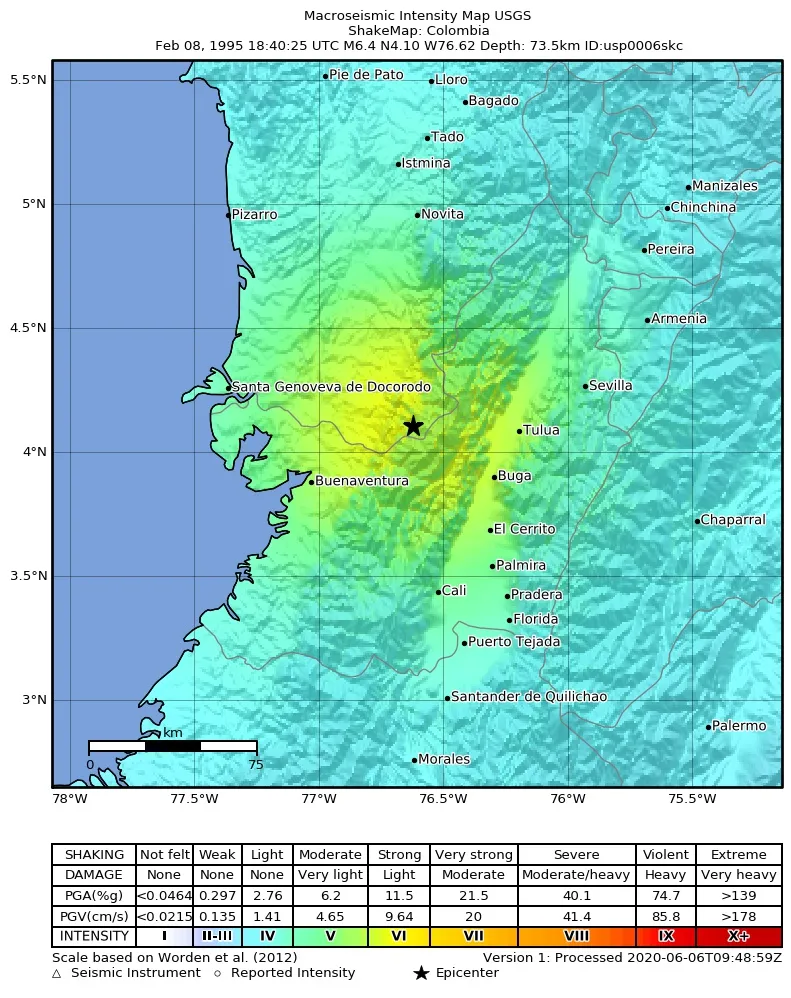
Photo: U.S. Geological Survey (USGS), Public domain, via Wikimedia Commons
There's a specific kind of morning that only happens in the Colombian coffee region. You wake up somewhere above 5,000 feet, step onto a wooden balcony painted in colors that would look garish anywhere else, and watch the mist roll off the hills like the whole valley is still deciding whether to show up. Somebody hands you a tinto — a small, strong cup of locally grown coffee — and for a moment, every decision that led you here feels absolutely correct.
Now fast-forward about eight hours. That same coffee is in your glass, cold-pressed into a cocktail with local aguardiente and a wedge of something citrusy you couldn't name at a lineup. And the person who made it is explaining, in careful English, exactly which farm the beans came from and why the altitude changes the way the spirit binds with the brew.
This is the Eje Cafetero in 2024 — and American travelers are only just starting to pay attention.
A Region That's Been Hiding in Plain Sight
The Eje Cafetero, or Coffee Axis, is the trio of Colombian departments — Caldas, Quindío, and Risaralda — that produce a significant chunk of the country's world-famous coffee. Towns like Salento, Manizales, and Filandia have been on the backpacker radar for years, mostly for their colonial architecture and proximity to the Valle de Cocora. But the narrative is shifting. What was once a day-trip destination from Medellín is increasingly becoming a place where people stay — and stay longer than they planned.
The infrastructure has quietly caught up. Coworking spaces have opened above coffee shops. Boutique hostels have added rooftop bars. And a generation of young Colombian bartenders, many trained in Bogotá or abroad, have returned to their home regions with a clear mission: build something that couldn't exist anywhere else.
The Coffee-to-Cocktail Pipeline
What makes the drink culture here genuinely different isn't novelty — coffee cocktails aren't new. Espresso martinis have been crowding bar menus from Nashville to Portland for years. What's different here is specificity.
In Salento, bars are working directly with micro-lot farms to source single-origin cold brew for their cocktail programs. In Manizales, you'll find bartenders experimenting with coffee cascara — the dried husks of the coffee cherry, typically discarded — as a cocktail ingredient, producing something that tastes like hibiscus and tamarind got into an interesting argument. At a small bar in Filandia that seats maybe 20 people, the owner will walk you through a tasting flight that pairs natural-process coffees with locally produced spirits, drawing flavor connections that make your brain do a little recalibration.
The terroir conversation, so familiar in wine culture, is happening here around coffee — and the bartenders are extending it directly into their cocktail menus. When a drink is built around beans grown at a specific altitude, processed a specific way, by a specific family, it stops being a cocktail and starts being a story you can taste.
Why Nomads Are Setting Up Shop Here
For remote workers, the Eje Cafetero is hitting a particular sweet spot. The cost of living is dramatically lower than Medellín, which itself is dramatically lower than anything comparable in the US. A long-term stay at a well-run guesthouse in Salento can run you a fraction of what you'd pay for a month in a mid-tier city stateside. The internet infrastructure, while not perfect, has improved significantly. And the quality of daily life — the food, the scenery, the social energy of small-town Colombia — is genuinely hard to beat.
But it's the evening culture that keeps people longer than they intended. There's a rhythm to nights in these towns that feels earned. You work through the morning in a café where the coffee is extraordinary and costs almost nothing. You spend the afternoon exploring a finca or hiking up toward the cloud forest. And then, as the Andean dark comes in fast the way it does near the equator, you find yourself at a bar that's doing something genuinely interesting with the same plants that defined this landscape for generations.
That combination — productive days, meaningful evenings, and an authenticity that hasn't been focus-grouped out of existence — is exactly what a certain kind of American traveler is chasing right now.
What to Drink (and Where to Start)
If you're planning your first trip to the region, a few entry points are worth knowing. Salento remains the most accessible and tourist-friendly, which cuts both ways — it's the easiest place to land, but also the most likely to feel slightly performative on a busy weekend. Go mid-week if you can.
Manizales is the region's largest city and the one most Americans overlook entirely. It has a university energy, a more local-facing bar scene, and some of the most interesting cocktail experimentation happening right now. The altitude here — sitting at around 7,000 feet — adds a particular clarity to the air that makes everything taste sharper, which sounds like something a pretentious food writer would say but is, annoyingly, true.
Filandia is the sleeper pick. Smaller, quieter, and increasingly home to the kind of creative types who left bigger cities specifically to build something slower and more intentional. The bar scene there is embryonic but worth watching.
As for what to drink: start with whatever the bartender is proudest of, and ask about the coffee sourcing. You'll learn more in that conversation than from any guidebook. Aguardiente-based cocktails are the local baseline, but rum and local fruit spirits are showing up more frequently as bartenders push their menus further. And yes, order the coffee drink — but ask them to tell you about the farm first.
The Window Is Open, But Not Forever
Here's the honest version of this story: the Eje Cafetero's moment of genuine discovery is probably a window of two or three years, maybe less. The infrastructure is there. The talent is there. The agricultural identity that makes the drink culture meaningful is absolutely there. What's missing is the flood of American attention that tends to arrive, rearrange things, and move on.
That's not cynicism — it's just pattern recognition. The same thing happened in Oaxaca. It's happening in certain corners of Southeast Asia right now. Places that build something real out of local identity tend to attract the right kind of traveler first, and then everyone else.
For now, the coffee towns of Colombia are still in the first category. The mist is still on the hills. The tinto is still 50 cents. And somewhere in Filandia, a bartender is doing something remarkable with a coffee cherry husk and a spirit you've never heard of.
You should probably go find out what it tastes like.