Soil, Water, and Story: The American Craft Distilleries That Are Pouring Their Hometowns Into Every Bottle
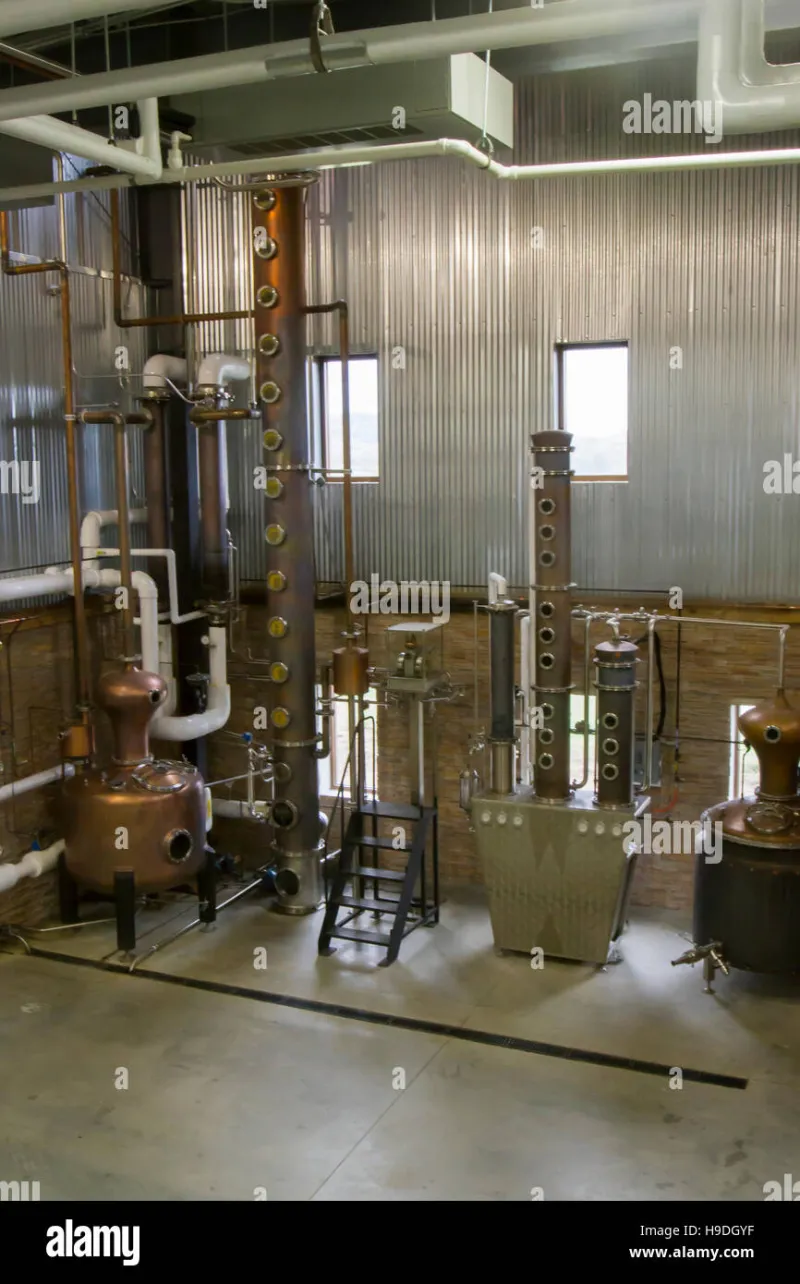
Photo: craft distillery rustic American countryside copper still tasting room, via c8.alamy.com
There's a glass of rye whiskey sitting in front of you. It smells faintly of the Allegheny Mountains — or at least, that's what the distiller just told you, and somehow, you believe her. She's the third generation of her family to work with grain in this part of West Virginia, and the water running through this operation comes from the same limestone spring her grandfather used to haul buckets from. You're not just drinking a spirit. You're drinking a place.
This is what distillery tourism looks like when it's done right — and across the country, a growing number of craft producers are betting that travelers are hungry for exactly this kind of connection. Not just a tasting flight and a branded rocks glass, but a genuine, boots-on-the-ground encounter with the land, the people, and the history that make a bottle worth opening.
The Appalachian Reclamation
In the mountain communities stretching from southwestern Pennsylvania down through Tennessee and into northern Georgia, whiskey has always been more than a product. It's a cultural artifact — something passed down through families, argued over at kitchen tables, and occasionally hidden from federal agents in the not-so-distant past.
The current generation of Appalachian distillers isn't hiding anything. They're shouting it from the ridge lines. Operations like Copper Fox Distillery in Sperryville, Virginia, and Watershed Distillery in Columbus, Ohio, have helped pave the way for a style of American whiskey-making that leans hard into regional identity. But it's the smaller, harder-to-find producers — the ones operating out of converted barns on family land — that are drawing a specific kind of traveler: the ones who want to understand a place through what it produces.
In eastern Kentucky, you'll find distillers sourcing heirloom corn varieties that were nearly wiped out during the consolidation of American agriculture. In the North Carolina highlands, at least one operation is aging its whiskey in barrels made from locally harvested white oak, the same species that once dominated the forests before the timber industry rolled through. Every one of these choices is a decision to tell a particular story — and travelers who make the drive are showing up to listen.
Foraged, Fermented, and Fiercely Local
Head west, and the hyperlocal philosophy takes on a different texture. In the Pacific Northwest, craft distillers are working with an ingredient list that reads more like a forager's journal than a production manifest. Douglas fir tips. Stinging nettles. Elderflower harvested from specific creek beds in the Cascades. Wild-harvested juniper berries from high desert scrublands in central Oregon.
Distilleries like Freeland Spirits in Portland and Copperworks Distilling in Seattle have helped establish the region's reputation for thoughtful, botanically driven spirits. But venture a bit further — into the Willamette Valley, up toward the Olympic Peninsula, or east into the volcanic landscape around Bend — and you'll find smaller operations doing work that's even more tightly bound to their immediate geography.
These aren't marketing gimmicks. Distillers in this region will walk you out the back door and into the landscape that supplies their production. Some run foraging workshops alongside their tastings. Others partner with Indigenous communities to ensure that wild harvesting practices are sustainable and culturally informed. The experience of visiting one of these spots feels less like a distillery tour and more like an ecology lesson with a very good drink at the end.
Water Is Everything (And Everyone's Finally Saying It Out Loud)
Ask any serious distiller what their most important ingredient is, and most of them — if they're being honest — will tell you it's water. The mineral composition, the pH level, the temperature at the source: all of it shapes what ends up in the bottle in ways that are surprisingly difficult to replicate anywhere else.
In the limestone-rich regions of Kentucky and Tennessee, this has been conventional wisdom for over a century. But distillers in less obvious locations are starting to make the same argument about their own water sources. In the Finger Lakes region of New York, producers are drawing on glacially filtered aquifer water that gives their spirits a particular softness. In the high desert of New Mexico, one distillery built its entire identity around the alkaline character of its local spring water, making agave spirits that taste unmistakably of their surroundings.
For travelers, water is a surprisingly compelling reason to visit a place. It's invisible, it's unglamorous, and it's the foundation of everything. There's something genuinely moving about standing at the source of a spring and then tasting what that water becomes a few hundred yards away inside a still.
How to Actually Do This Trip
If you're ready to build a travel itinerary around craft distillery visits — and honestly, there are worse frameworks for exploring this country — a few principles are worth keeping in mind.
Go small and call ahead. The distilleries worth seeking out are often operating with minimal staff and irregular hours. A quick phone call or email before you show up goes a long way. Many of the most interesting producers don't have polished visitor centers; they have working facilities that welcome guests when capacity allows.
Ask about the ingredients first. The fastest way to gauge whether a distillery is genuinely rooted in its place or just leaning on regional branding is to ask where their raw materials come from. The real ones will get excited. They'll name the farm, the variety, the season. The ones who deflect or go vague are probably worth skipping.
Plan around harvest season. If a distillery is working with local grain, fruit, or botanicals, there's a window in the year when that ingredient is being processed and the whole operation has a particular energy. Late summer and early fall tend to be peak season across most of the country, but it varies by region and ingredient.
Build in drive time. The best craft distilleries are rarely in the middle of a city. They're in the landscapes that supply them. That's the point. Treat the drive as part of the experience — because it is.
The Pour at the End of the Road
What keeps drawing travelers to these places isn't really the spirits themselves — or not only that. It's the sense that something real is being made here, by people who care deeply about where they come from and what they're leaving behind. In a world where most of what we consume has been abstracted away from its origins, there's a quiet power in holding a glass and knowing exactly where it came from.
The best craft distillers in America aren't just making whiskey or gin or brandy. They're making arguments — about place, about history, about what it means to pay attention to the land beneath your feet. Visiting them is a way of agreeing that those arguments matter.
And the drink is pretty good too.