Frontier Spirits: The Backroad Distilleries Along America's Northern Border That Are Rewriting the Craft Liquor Map
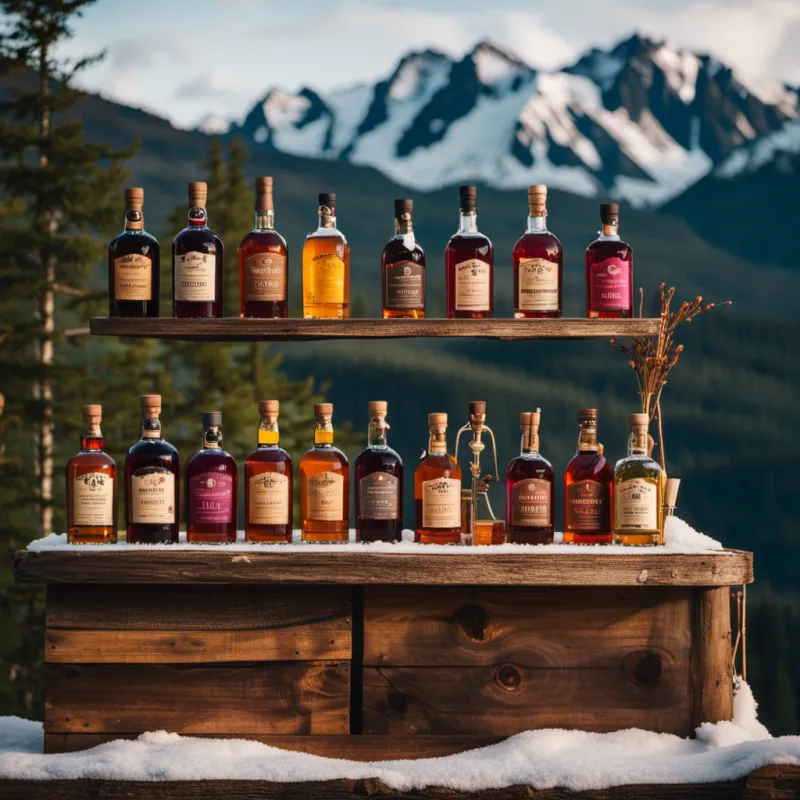
Photo: small craft distillery rural northern USA border town winter, via voyagerinfo.com
There's a particular kind of quiet you only find in a small town that the interstate forgot. The kind where a screen door slaps shut behind you, gravel crunches under your boots, and the smell of fermenting grain hits you before you even see the building. That's the smell of something being made from scratch — and along the northern edge of the United States, from the rain-soaked forests of the Pacific Northwest to the frozen flatlands of upstate New York, a loose community of distillers is turning that quiet into something worth raising a glass to.
They're not in Bardstown. They're not in Lynchburg. They're in places most Americans couldn't find on a map without squinting — towns perched right up against the Canadian border, where the culture, the ingredients, and the whole vibe of making spirits has always been a little different.
Why the Border Changes Everything
To understand what makes these distilleries interesting, you have to understand what the border actually means to the people who live near it. For communities in places like Blaine, Washington, or Derby Line, Vermont, or Pembina, North Dakota, the line between countries has always been more of a suggestion than a wall. Families have straddled it for generations. Ingredients move across it. Traditions bleed through it.
That cross-pollination shows up in the bottle. Canadian whisky traditions — lighter, rye-forward, blended — have quietly influenced the way some of these American distillers think about grain selection and aging. You'll find small-batch rye expressions that don't quite fit into any established American category, gin programs built around botanicals foraged from boreal forests that stretch uninterrupted from Montana into Alberta, and apple brandies that owe as much to Quebec orchards as they do to New England ones.
"We're not trying to make Kentucky bourbon," says one distiller operating out of a converted grain elevator near the Minnesota-Manitoba border. "We're making what makes sense here. And what makes sense here has a Canadian accent whether we like it or not."
The Distillers Themselves Are Half the Draw
If you're the kind of traveler who gets bored of polished tasting rooms with laminated menus and branded glassware, you're going to love these places. The founders running distilleries in America's northern frontier towns are, almost universally, characters. Former lumber workers. Ex-pat Canadians who crossed south and never left. Farmers who got tired of selling grain at commodity prices and decided to add some value themselves.
In Eastport, Idaho — a blink-and-miss-it town on the British Columbia border — one distillery is run by a retired wildlife biologist who spent twenty years studying wolverines before deciding fermentation was more interesting. His gin uses local huckleberries and a rotating cast of foraged botanicals that changes with the season. He'll tell you about every single one of them if you let him, and you should let him, because it's genuinely fascinating.
Further east, in the Champlain Valley region of northern Vermont, a husband-and-wife team has been making apple brandy since 2017 using heirloom varieties sourced from both sides of the border. Their tasting room is a converted dairy barn. There's a wood stove. A dog sleeps near it. The brandy is, without exaggeration, one of the better things you'll drink this year.
These aren't polished brand experiences. They're conversations with people who are deeply, almost obsessively invested in what they're making. That's the whole point of going.
How to Actually Do This Trip
Border distillery tourism doesn't lend itself to a single trail the way Kentucky's bourbon country does. It's more of a choose-your-own-adventure situation, which is either a feature or a bug depending on your travel style.
The Pacific Northwest corridor — running from Bellingham, Washington, up through the Okanagan-adjacent towns near the Idaho panhandle — is probably the most developed of the regional scenes, with enough distilleries within a two-hour radius to fill a solid long weekend. Pair it with a detour into the Methow Valley for scenery, or use Spokane as a base and work your way north.
The Upper Midwest route is harder but more rewarding for the truly committed. Towns like International Falls, Minnesota, or Cavalier, North Dakota, don't show up on anyone's travel radar, which means you'll have the tasting rooms almost entirely to yourself. Combine it with a drive through the Boundary Waters region and you've got one of the more underrated road trips in the country.
New England's northern tier — Vermont, New Hampshire, and Maine along the Quebec border — is the most accessible entry point for East Coasters. The infrastructure is better, the towns are more tourist-ready, and the density of interesting producers per square mile is genuinely impressive. Burlington, Vermont, makes an excellent anchor city, with day trips north to the border towns where the real gems tend to hide.
What You're Actually Drinking
The spirits coming out of these border towns resist easy categorization, which is part of what makes them interesting. You'll find:
- Rye whiskeys with a lighter, more delicate profile than their Midwest counterparts, influenced by Canadian blending traditions
- Botanical gins built around hyper-local, often foraged ingredients — think spruce tips, labrador tea, cloudberries
- Apple and pear brandies drawing on fruit grown in microclimates shaped by proximity to the Great Lakes or the St. Lawrence Valley
- Honey spirits and meads from distillers working with northern apiaries producing intensely flavored honey from boreal wildflowers
- Experimental grain spirits from distillers playing with heritage wheat and barley varieties grown right up to the 49th parallel
None of it tastes like what you'd expect, which is exactly the point.
The Crowd Is Still Small. For Now.
Here's the honest pitch: these places are not yet overrun. The tasting rooms are not yet charging $40 for a flight. The distillers are not yet too busy to talk to you. The towns themselves are not yet full of boutique hotels and farm-to-table restaurants competing for the same Instagram audience.
That will change. It always does. The craft spirits world has a way of turning obscure into sought-after faster than anyone expects, and a few of these border distilleries are already generating the kind of quiet word-of-mouth that precedes a feature in a major food magazine by about eighteen months.
So go now. Drive the backroads. Cross a time zone or two. Pull over when you see a hand-painted sign pointing toward a converted barn. Order the thing on the menu you've never heard of. Ask the person behind the bar where the botanicals came from.
The answer, more often than not, will involve a story that starts somewhere just north of the border and ends up being about something much bigger — about place, and identity, and what it means to make something entirely your own out of wherever you happen to find yourself.
That's the kind of drink worth traveling for.