The Port City That Pours Different: Why Genoa Is Italy's Secret Aperitivo Capital
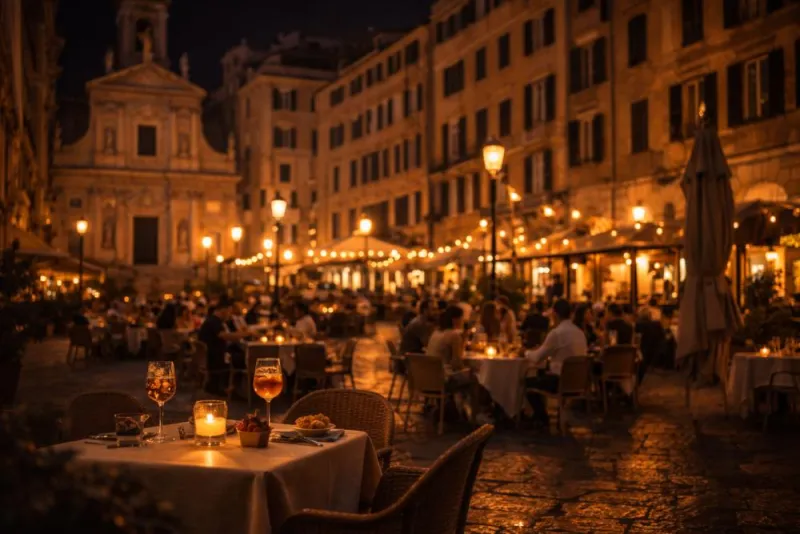
Photo: Genoa Italy aperitivo bar old city caruggi vermouth cocktails, via pics.escorta.com
There's a moment, somewhere between the third caruggio and the second glass of something cold and botanical, when Genoa stops feeling like a layover and starts feeling like a destination. That shift happens fast. The city doesn't announce itself the way Florence does. It doesn't perform. It just pours.
And what it pours, more often than not, is vermouth.
For a generation of American bartenders raised on the Negroni gospel and the Turin pilgrimage, Genoa has existed somewhere in the peripheral vision — a port city you pass through on the way to Cinque Terre, a place with good focaccia and confusing one-way streets. But something is shifting. The bartenders who've started paying closer attention to Liguria's capital are coming home with a different vocabulary, a deeper appreciation for low-ABV complexity, and more than a few bottles they can't find at home.
Why Genoa Got Overlooked in the First Place
The honest answer is geography — or rather, the story geography tells. Turin is where vermouth was commercially codified. Milan is where the Campari empire was built. Those cities have the brand recognition, the distillery tours, the Instagram infrastructure. Genoa, despite sitting at the crossroads of centuries of Mediterranean trade, never quite assembled the same PR apparatus around its drinking culture.
But the trade routes are exactly the point. As a major port city, Genoa absorbed botanical influences from across the Mediterranean for hundreds of years — herbs, spices, and aromatic roots moving through the harbor on their way to everywhere else. Local producers didn't just make vermouth. They made vermouth shaped by proximity to the sea, by Ligurian hillside herbs, by a palate calibrated to the particular salt-and-citrus character of the coastal air.
That terroir — and yes, vermouth people use that word — shows up in the glass in ways that are genuinely distinct from what you find two hours north in Piedmont.
The Producers Rewriting the Story
A handful of small Ligurian producers have spent the last decade doing the quiet work of revival. They're not chasing trends. They're excavating recipes, sourcing local botanicals — wild thyme, myrtle, dried citrus peel from the coastal groves — and building vermouths that taste unmistakably of where they come from.
One producer, working out of a facility that looks more like a family cellar than a commercial operation, describes his approach as "listening to the harbor." That sounds poetic until he explains what he means: the historical records of what came through Genoa's port in the 17th and 18th centuries read like a botanical encyclopedia. His job, as he sees it, is to put those ingredients back in conversation with each other.
American bartenders who've made the trip specifically to meet producers like him describe the experience as recalibrating. "You think you know vermouth," one New York-based bar director said after a visit last spring, "and then you taste something that's been resting in Ligurian oak and it's like the category opens up."
The Bars Worth Getting Lost For
Genoa's old city — a UNESCO-listed tangle of medieval lanes called the caruggi — is not a neighborhood that rewards Google Maps optimization. It rewards wandering. And it rewards showing up around six in the evening, when the aperitivo hour begins in earnest and the city's historic bars start filling with locals who've been doing this for generations.
A few spots have become essential stops for visiting bartenders, though "essential" in Genoa is a relative term — the city has a way of making you feel like you've discovered something no one else knows about, even when you're sitting in a bar that's been open since the 1950s.
Look for the places that still stock their own house vermouth, served simply over ice with a twist of lemon and maybe a dish of olives. That's the aperitivo in its least complicated form, and in Genoa, uncomplicated is not the same as unsophisticated. The quality of the base wine, the balance of the botanicals, the faint bitterness that lingers without overstaying — these are the things that make a simple pour feel like a lesson.
The newer generation of Genoese bartenders is building on that foundation rather than departing from it. In a few small cocktail bars tucked into the caruggi, you'll find menus that treat local vermouth the way a good American craft bar treats house-made bitters — as a signature ingredient that anchors everything else. Spritzes built on Ligurian dry vermouth instead of prosecco. Martini variations that swap the standard French dry for something more herbal and coastal. Low-ABV long drinks that somehow manage to be more interesting than their higher-octane counterparts.
What American Bartenders Are Actually Taking Home
It's not just technique. The bartenders making this trip tend to come back with a changed relationship to restraint. American cocktail culture — for all its genuine brilliance — has a tendency toward maximalism. More ingredients, more layers, more wow. Genoa's aperitivo tradition operates on a different logic. The goal is a drink that opens the appetite and the conversation simultaneously, without demanding to be the center of attention.
That philosophy is starting to show up behind bars in cities like Chicago, Portland, and Charleston, where a new wave of low-ABV menus is drawing on European aperitivo culture as a reference point. The bartenders who've spent time in Genoa specifically bring back something slightly different from the Turin or Milan contingent — a rougher edge, a more maritime quality, a willingness to let bitterness do more of the heavy lifting.
Several have also started importing or advocating for import of smaller Ligurian producers, which is its own kind of pilgrimage outcome. A few bottles have made it onto menus in New York and Los Angeles, where they tend to sell quietly to the people who know what they're looking at.
Getting There and Getting Oriented
Genoa is easier to reach than its relative obscurity might suggest. Direct flights from the US are limited, but connections through Rome, Milan, or Paris are straightforward, and the city is well-served by Italy's rail network. If you're building a broader Italian itinerary, it fits naturally between Milan and the Cinque Terre coast — though once you're settled into the caruggi with a glass of something local, the idea of rushing onward starts to feel genuinely absurd.
The aperitivo hour runs roughly from 6 to 8 PM and is observed with the kind of seriousness that Americans reserve for Sunday brunch. Show up, order something local, eat the snacks, talk to the person next to you. The bar culture here isn't performative. It's just good.
And for the bartenders reading this who've been eyeing Turin as the next research trip — go to Turin. It's worth it. But add a few days in Genoa afterward. The port city has been pouring its own story for centuries. It's about time more of us showed up to hear it.