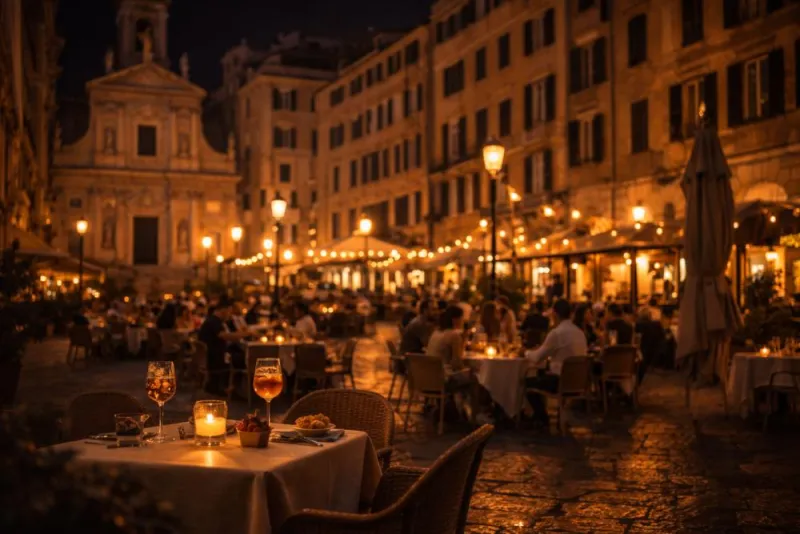
The Basement Bars of Tbilisi Are Pouring 8,000 Years of Wine Into Your Cocktail

Photo: Andrew Milligan sumo, CC BY 2.0, via Wikimedia Commons
Tbilisi does not ease you into its drinking culture. It hands you a glass of amber wine in a basement with stone walls, introduces you to a winemaker who farms a half-hectare, and then asks whether you have tried chacha. By midnight you are three neighborhoods from your hotel and seriously considering a second suitcase for bottles.
That is the appeal of the Georgian capital right now. The country's qvevri tradition—wine fermented and aged in clay vessels buried in the ground—is roughly 8,000 years old. But the bars pouring it have gotten younger, louder, and more inventive. In Tbilisi, natural winemakers and bartenders are treating amber wine as an ingredient, not just a curiosity. The result is a cocktail scene that feels nothing like the polished hotel bars of Western Europe and everything like a city that has been making wine since before the phrase wine list existed.
A Wine Culture Older Than Your Wine List
Georgia is not a new discovery for oenophiles. It is a foundational wine country, and qvevri winemaking is UNESCO-recognized. What has changed is who is drinking it. Younger Georgians, returning diaspora, and a growing stream of travelers are crowding into wine bars that treat the old method with respect but not reverence. You will find skin-contact whites—often called amber wines—served by the glass next to vermouth, amaro, and a proper cocktail shaker.
For American travelers, the context matters. If you have done the Napa tasting-room circuit or paid $18 for a glass in Brooklyn, Tbilisi feels almost unreasonable. A good glass of qvevri wine often costs the equivalent of $3 to $6. A well-made cocktail lands around $6 to $10. The city is walkable in parts, cheap by taxi, and generous with hospitality. The catch is that you need to know where to look. Tbilisi's best drinking is often downstairs, behind unmarked doors, or through a courtyard that looks like someone's apartment entrance.
Start in Sololaki, Then Follow the Locals
Sololaki is the neighborhood to begin. Its streets are steep, balconied, and full of small wine bars that open late and fill up later. This is where you will find the natural-wine crowd: sommeliers off shift, students, journalists, and travelers who read one too many wine newsletters. The bars are small enough that conversation is unavoidable, which is part of the point.
From there, move toward Vera and the area around Fabrika, the former Soviet sewing factory turned hostel, courtyard, and creative complex. Fabrika is not underground, but it is a useful orientation point for a younger crowd. Nearby bars lean experimental, with menus that mix Georgian ingredients into classic formats. Think amber wine spritzes, chacha sours, and highballs built on tarragon soda.
The real move is to ask a bartender where they drink on their night off. Tbilisi's scene is social and interconnected. A recommendation from one bar often leads to a basement room with six seats, a chalkboard menu, and a winemaker who just happened to bring bottles from Kakheti.
Amber Wine Behind the Bar
The cocktail angle is what makes Tbilisi different from a standard wine trip. Amber wine has texture, tannin, and a savory edge that works beautifully in mixed drinks. Bartenders are using it in spritzes instead of Prosecco, in Negroni variations, and as a split base with brandy or chacha. The result is drier and more complex than a typical wine cocktail, with a bitterness that can stand up to food.
Chacha, the grape-pomace spirit, is the other key. It can be rough, but good versions are clean and fruity. In cocktails, it behaves like a young brandy or grappa. Ask for a chacha sour or a chacha highball with citrus and soda. If a bar offers a tasting flight of amber wines before you order, take it. The education is worth the slight delay.
Do not ignore the non-alcoholic side, either. Georgian tarragon soda, pear lemonade, and mineral waters from the Caucasus are part of the table culture. Many bars will make a zero-proof spritz if you ask. It is not a dedicated NA scene, but hospitality is strong enough that no one will make you feel awkward.
The Bottle Shops and Tasting Rooms Worth Your Time
The best souvenir from Tbilisi is not a refrigerator magnet. It is a bottle of qvevri wine you cannot easily buy at home. Look for small wine shops attached to bars, especially in Sololaki and Vera. Staff are usually happy to let you taste before you buy, and prices for natural wine are far below US retail.
If you want a more structured tasting, book a visit to a wine bar that specializes in small producers rather than a large commercial cellar. Ask specifically for skin-contact whites from Kakheti and reds from Kartli. The terminology can be confusing, so lead with what you like: I drink dry riesling and light reds is more useful than pretending to know every Georgian grape.
For a daytime stop, combine a wine shop visit with the city's bathhouse district. The sulfur baths are a Tbilisi ritual, and a late-afternoon soak followed by a glass of amber wine is a better itinerary than another museum. You are here for the culture, after all. The culture happens to be fermented.
How to Do a Tbilisi Bar Night Without Overplanning
Start early by Georgian standards. Many bars open around 6 p.m., and dinner usually begins late. Have a light meal, then begin with a wine bar. Move to a cocktail bar after 9 p.m., when the rooms fill and the music comes up. Keep your route loose. Tbilisi rewards wandering, and the best bar is often the one you stumble into because the one you planned is full.
Use ride-hailing apps for longer hops, especially after dark. The metro is cheap and efficient, but not every bar is near a station. Carry some cash for smaller spots, though cards are widely accepted. Learn to say gamarjoba for hello and madloba for thank you. You will not need much more.
Dress casually. Tbilisi's bar scene is stylish but not formal. Sneakers are fine. So is a jacket. The city is hilly, so wear shoes you can walk in.
The Practical Case for the Detour
Tbilisi is not on the way to anywhere most Americans are already going. That is precisely why it works. It is a detour that feels like a discovery, even as the city's wine bars fill with people who have heard the same thing. The combination of ancient technique and young energy is rare. You can taste wine made in buried clay, then order a cocktail that uses the same wine as a base. You can spend a week and still feel like you have only scratched the basement.
Go before the rest of your friend group does. Bring an extra suitcase. And leave room in your itinerary for a second night in Sololaki, because the first one will not be enough.